GREAT
280+ Reviews

Implants: The permanent solution to missing teeth
Implants: The permanent solution to missing teeth
Implants: The permanent solution to missing teeth
Eat well. Smile easy. Honest, pain-free implant care so you can feel like yourself again.
Eat well. Smile easy. Honest, pain-free implant care so you can feel like yourself again.
Eat well. Smile easy. Honest, pain-free implant care so you can feel like yourself again.
Book consultation
Book consultation
Book consultation
Book consultation


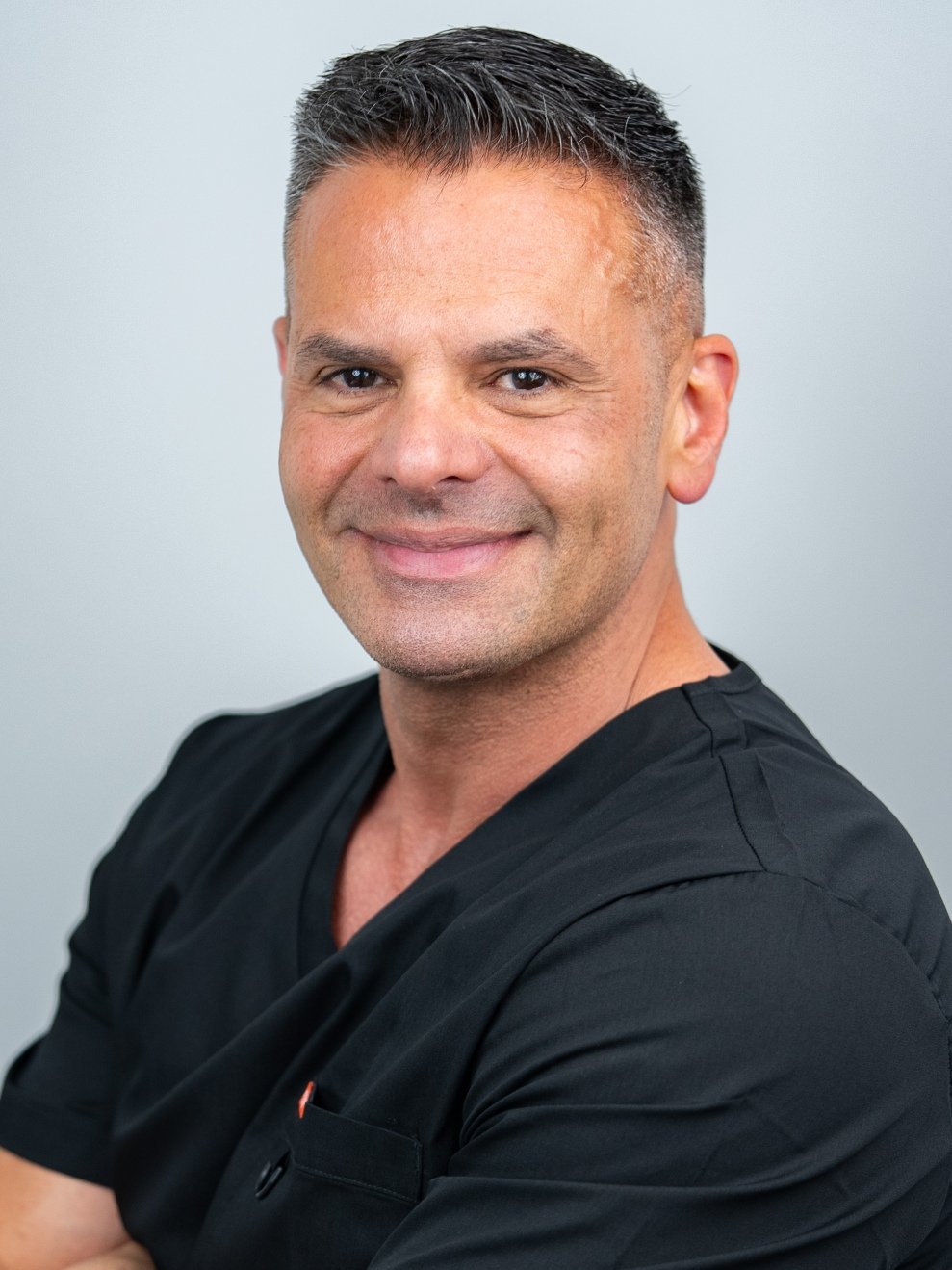
30+ Years experience
30+ Years experience
30+ Years experience

Book your free consultation
Book your free consultation
LEADING IMPLANT DENTISTRY
EXPERT IMPLANT DENTISTRY
LEADING IMPLANT DENTISTRY
Same Day Teeth Mansfield.
Same Day Teeth Mansfield.
Same Day Teeth Mansfield.
This innovative approach allows both the implant and crown/bridge to be placed in a single visit, providing an immediate cosmetic solution while the implant integrates with the jawbone.
This innovative approach allows both the implant and crown/bridge to be placed in a single visit, providing an immediate cosmetic solution while the implant integrates with the jawbone.
A reliable alternative to dentures
A reliable alternative to dentures
A reliable alternative to dentures
Pain-free, with anaesthetic included
Pain-free, with anaesthetic included
Pain-free, with anaesthetic included
Feel like yourself again, without restrictions
Feel like yourself again, without restrictions
Feel like yourself again, without restrictions
Not sure where to start?
Here’s why people choose us
Unsure where to start?
Here’s why people choose us
Not sure where to start?
Here’s why people choose us
Not sure where to start? Here’s why people choose us
50+ Years
50+ Years
50+ Years
of combined experience in placing implants that last so you know you’re in good hands.
Of combined implant experience, so you know you’re in safe hands.
50+ Years
of combined experience in placing implants that last so you know you’re in good hands.
of combined experience in placing implants that last so you know you’re in good hands.
5,000+ Smiles
5,000+ Smiles
5,000+ Smiles
Transformed with care, one smile at a time.
5,000+ Smiles
Transformed with care, one smile at a time.
0%
0%
0%
Interest-free options to spread the cost of your smile makeover.
Interest-free options to spread the cost of your treatment.
0%
Interest-free options to spread the cost of your smile makeover.
How Implants Can Fit Into Your Life
How Implants Can Fit Into Your Life
How Implants Can Fit Into Your Life
Missing teeth can have a major impact on your oral health, appearance, and overall well-being, causing issues with chewing, speaking, and even leading to bone loss and shifting teeth.
At Titchfield Park Dental Clinic , we offer dental implants as a trusted, long-term solution.
Our implants restore both function and aesthetics while preserving jawbone health and preventing further bone loss.
With our advanced implant solutions, you can expect:
Missing teeth can have a major impact on your oral health, appearance, and overall well-being, causing issues with chewing, speaking, and even leading to bone loss and shifting teeth.
At Titchfield Park Dental Clinic , we offer dental implants as a trusted, long-term solution.
Our implants restore both function and aesthetics while preserving jawbone health and preventing further bone loss.
With our advanced implant solutions, you can expect:
Missing teeth can have a major impact on your oral health, appearance, and overall well-being, causing issues with chewing, speaking, and even leading to bone loss and shifting teeth.
At Titchfield Park Dental Clinic, we offer dental implants as a trusted, long-term solution.
Our implants restore both function and aesthetics while preserving jawbone health and preventing further bone loss.
With our advanced implant solutions, you can expect:
A permanent smile that feels natural
A permanent smile that feels natural
A permanent smile that feels natural
A permanent smile that feels natural
A treatment plan built around your needs
A treatment plan built around your needs
A treatment plan built around your needs
A treatment plan built around your needs
Clearer speech, renewed confidence, and the freedom to enjoy food again
Clearer speech, renewed confidence, and the freedom to enjoy food again
Clearer speech, renewed confidence, and the freedom to enjoy food again
Clearer speech, renewed confidence, and the freedom to enjoy food again
50+ YEARS OF EXPERIENCE
50+ YEARS OF EXPERIENCE
Honest Implants, Close To Home
Honest Implants, Close To Home
Honest Implants, Close To Home
We keep things simple here at Titchfield. Implants are what we are passionate about.
We’ve spent years fixing teeth for our local community, the way it should be done. Using implants that last and look just like the real thing. It’s not flashy, but it works.
We’re not big on mission statements. We just come in each day and do our bit, one smile at a time. We don’t see it as cosmetic dentistry, we just think teeth should work well and look nice, that’s the goal.
Implants are what we’re known for. But we put just as much time into the part people actually see: the porcelain, the shape, the finish. All the little touches that make a smile feel like your own.
We keep things simple here at Titchfield. Implants are what we are passionate about.
We’ve spent years fixing teeth for our local community, the way it should be done. Using implants that last and look just like the real thing. It’s not flashy, but it works.
We’re not big on mission statements. We just come in each day and do our bit, one smile at a time. We don’t see it as cosmetic dentistry, we just think teeth should work well and look nice, that’s the goal.
Implants are what we’re known for. But we put just as much time into the part people actually see: the porcelain, the shape, the finish. All the little touches that make a smile feel like your own.
We keep things simple here at Titchfield. Implants are what we are passionate about.
We’ve spent years fixing teeth for our local community, the way it should be done. Using implants that last and look just like the real thing. It’s not flashy, but it works.
We’re not big on mission statements. We
just come in each day and do our bit, one smile at a time. We don’t see it as cosmetic dentistry, we just think teeth should work well and look nice, that’s the goal.
Implants are what we do. But we put just as much time into the part people actually see: the zirconia, the shape, the finish. All the little touches that make a smile feel like your own.
We keep things simple here at Titchfield. Implants are what we are passionate about.
We’ve spent years fixing teeth for our local community, the way it should be done. Using implants that last and look just like the real thing. It’s not flashy, but it works.
We’re not big on mission statements. We just come in each day and do our bit, one smile at a time. We don’t see it as cosmetic dentistry, we just think teeth should work well and look nice, that’s the goal.
Implants are what we’re known for. But we put just as much time into the part people actually see: the porcelain, the shape, the finish. All the little touches that make a smile feel like your own.
Your Implant Journey
Your Implant Journey
Your Implant Journey
1st step
Implant chat.
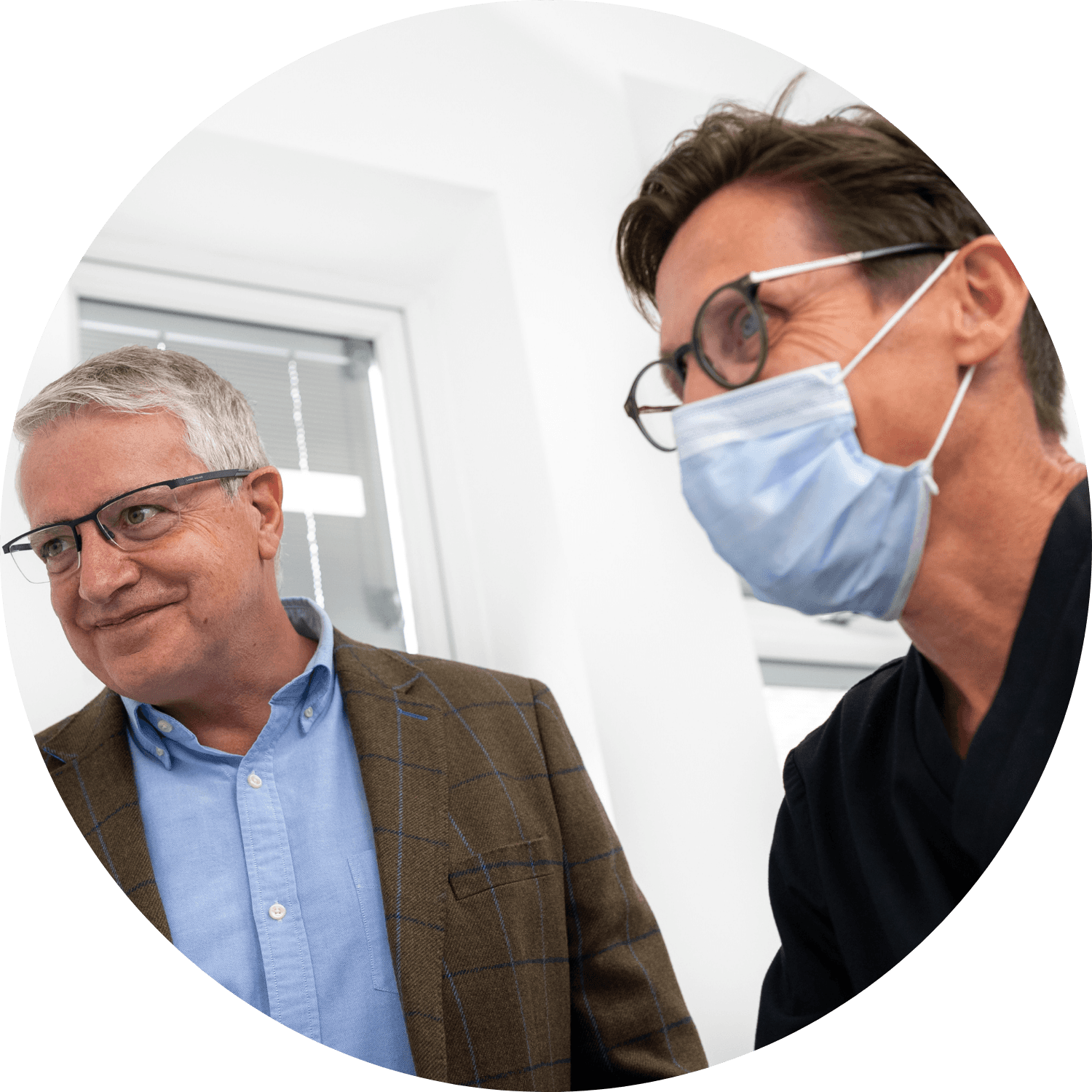
A relaxed conversation about the results you want, your current dental situation and anything you’re unsure about. We’ll check if implants are the right fit, outline the options best suited to you and give you a clear sense of costs so you can make an informed decision.
2nd step
Planning.
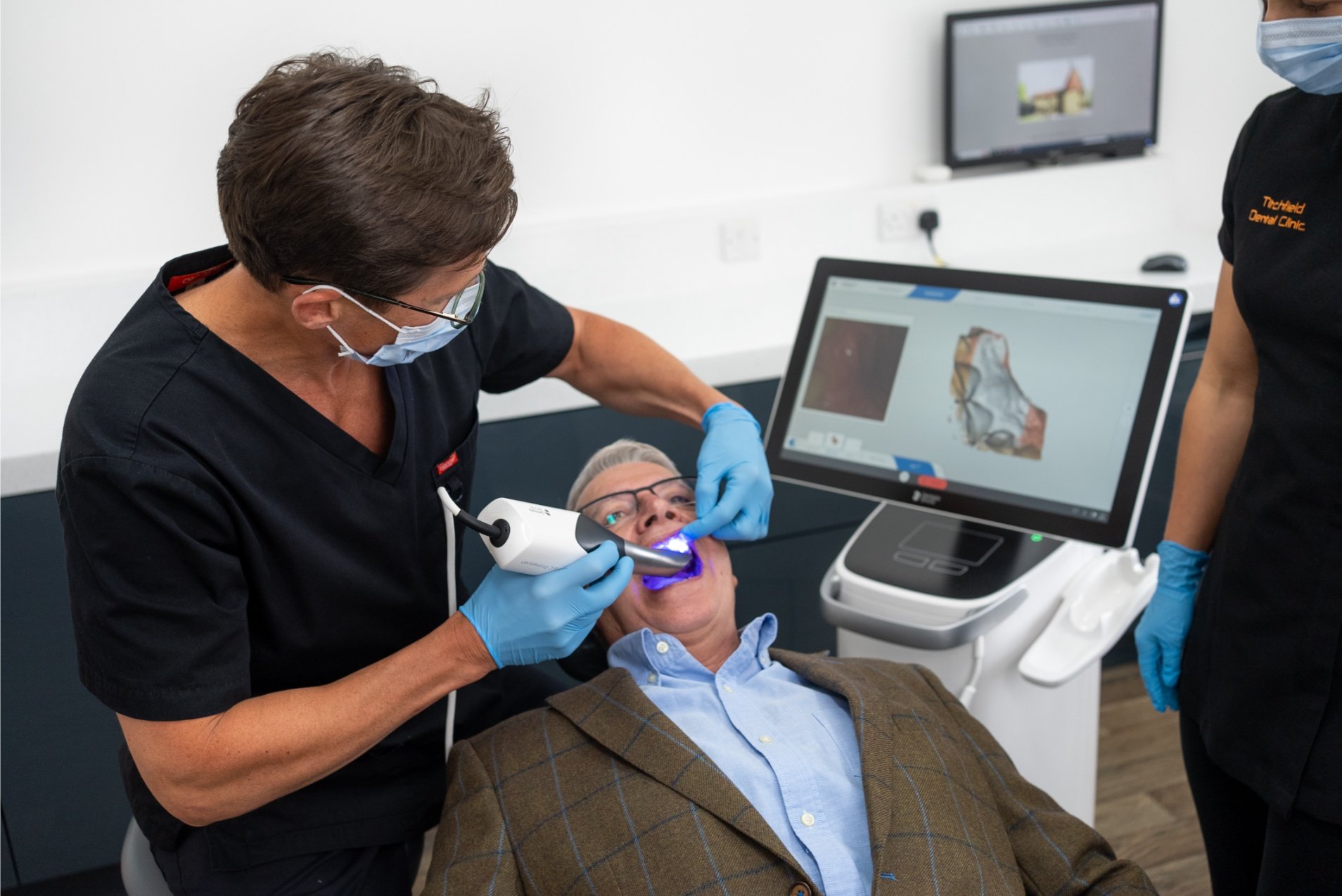
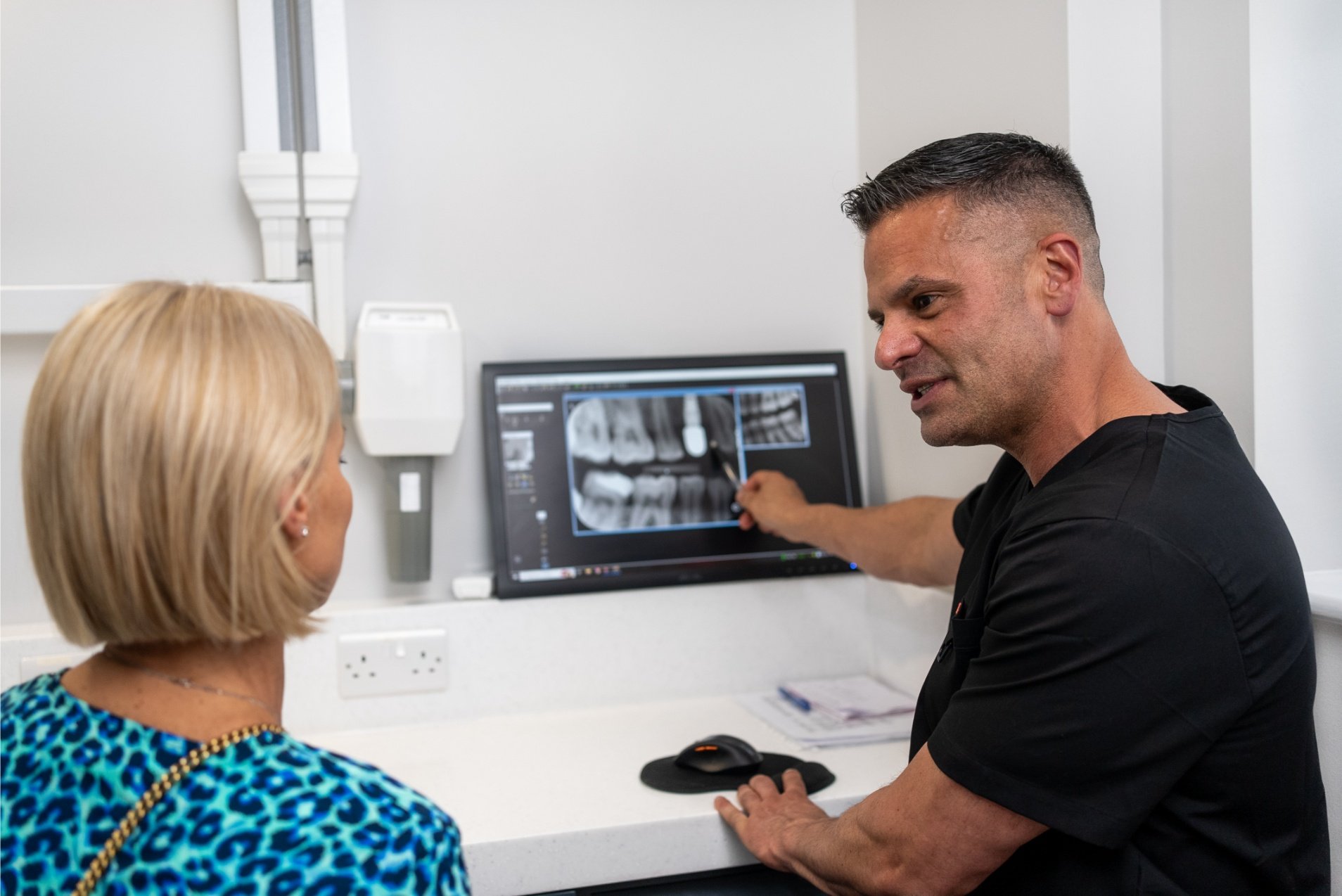
CBCT and intraoral scans are taken to assess your gum and bone health in detail and begin mapping out the most reliable route to a successful implant placement. This stage involves very careful analysis on our side, so you end up with a result you can rely on.
Phase 01
Consultation
1st step
Implant chat.
A relaxed conversation about the results you want, your current dental situation and anything you’re unsure about. We’ll check if implants are the right fit, outline the options best suited to you and give you a clear sense of costs so you can make an informed decision.
2nd step
Planning.
CBCT and intraoral scans are taken to assess your gum and bone health in detail and begin mapping out the most reliable route to a successful implant placement. This stage involves very careful analysis on our side, so you end up with a result you can rely on.
Phase 01
Consultation
1st step
Implant chat.
A relaxed conversation about the results you want, your current dental situation and anything you’re unsure about. We’ll check if implants are the right fit, outline the options best suited to you and give you a clear sense of costs so you can make an informed decision.
2nd step
Planning.
CBCT and intraoral scans are taken to assess your gum and bone health in detail and begin mapping out the most reliable route to a successful implant placement. This stage involves very careful analysis on our side, so you end up with a result you can rely on.
Phase 01
Consultation
3rd step
Implant placement.
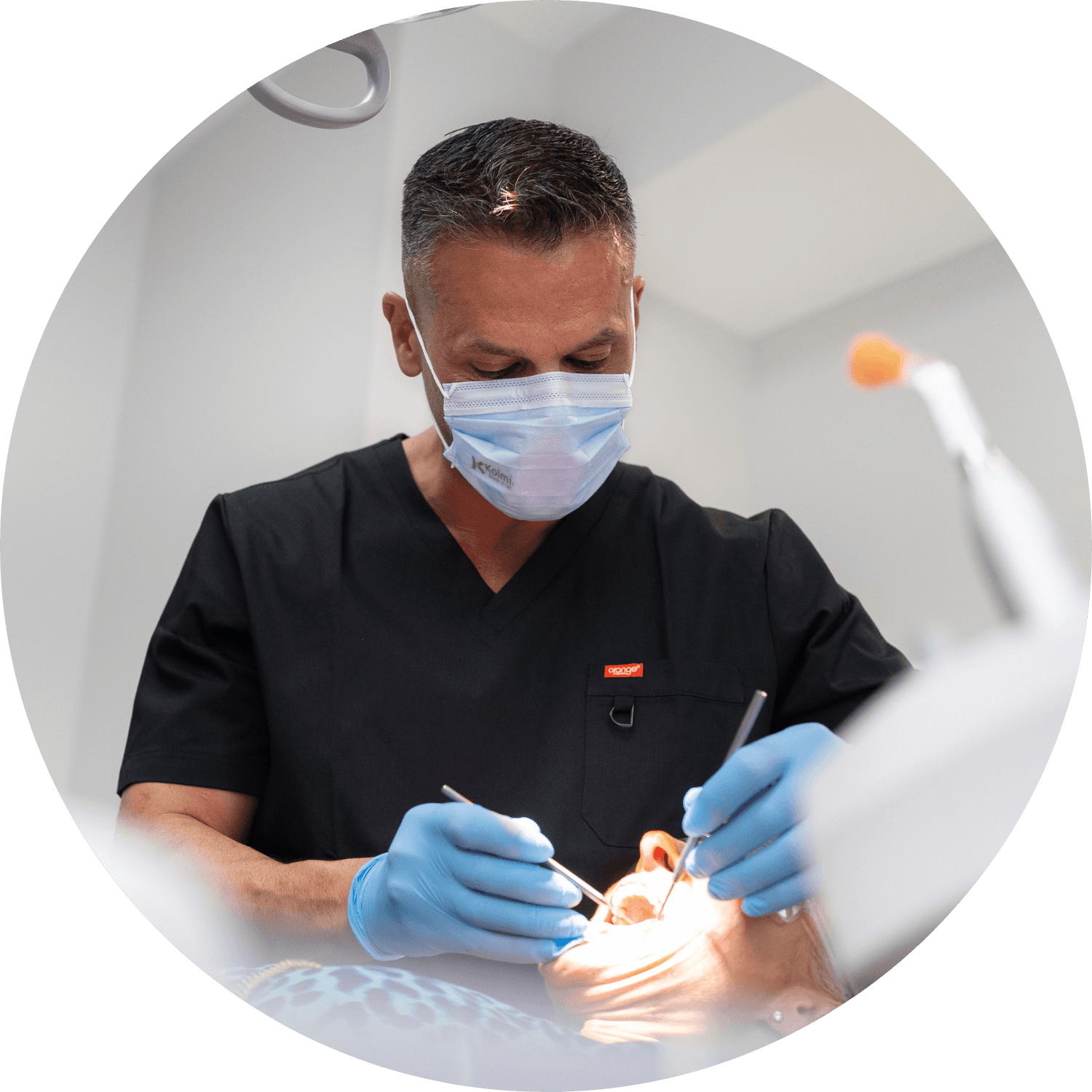
Your implant is placed under local anaesthetic, so the procedure itself is comfortable. Some soreness is normal for a week or so, but we’ll provide clear guidance on how to look after the area as it heals.
4th step
Healing review.
Two weeks after placement, we'll arrange a short appointment to check how the area is healing and make any small adjustments needed, like removing stitches.
Phase 02
Procedure
3rd step
Implant placement.
Your implant is placed under local anaesthetic, so the procedure itself is comfortable. Some soreness is normal for a week or so, but we’ll provide clear guidance on how to look after the area as it heals.
4th step
Healing review.
Two weeks after placement, we'll arrange a short appointment to check how the area is healing and make any small adjustments needed, like removing stitches.
Phase 02
Procedure
3rd step
Implant placement.
Your implant is placed under local anaesthetic, so the procedure itself is comfortable. Some soreness is normal for a week or so, but we’ll provide clear guidance on how to look after the area as it heals.
4th step
Healing review.
Two weeks after placement, we'll arrange a short appointment to check how the area is healing and make any small adjustments needed, like removing stitches.
Phase 02
Procedure
5th step
Integration check.
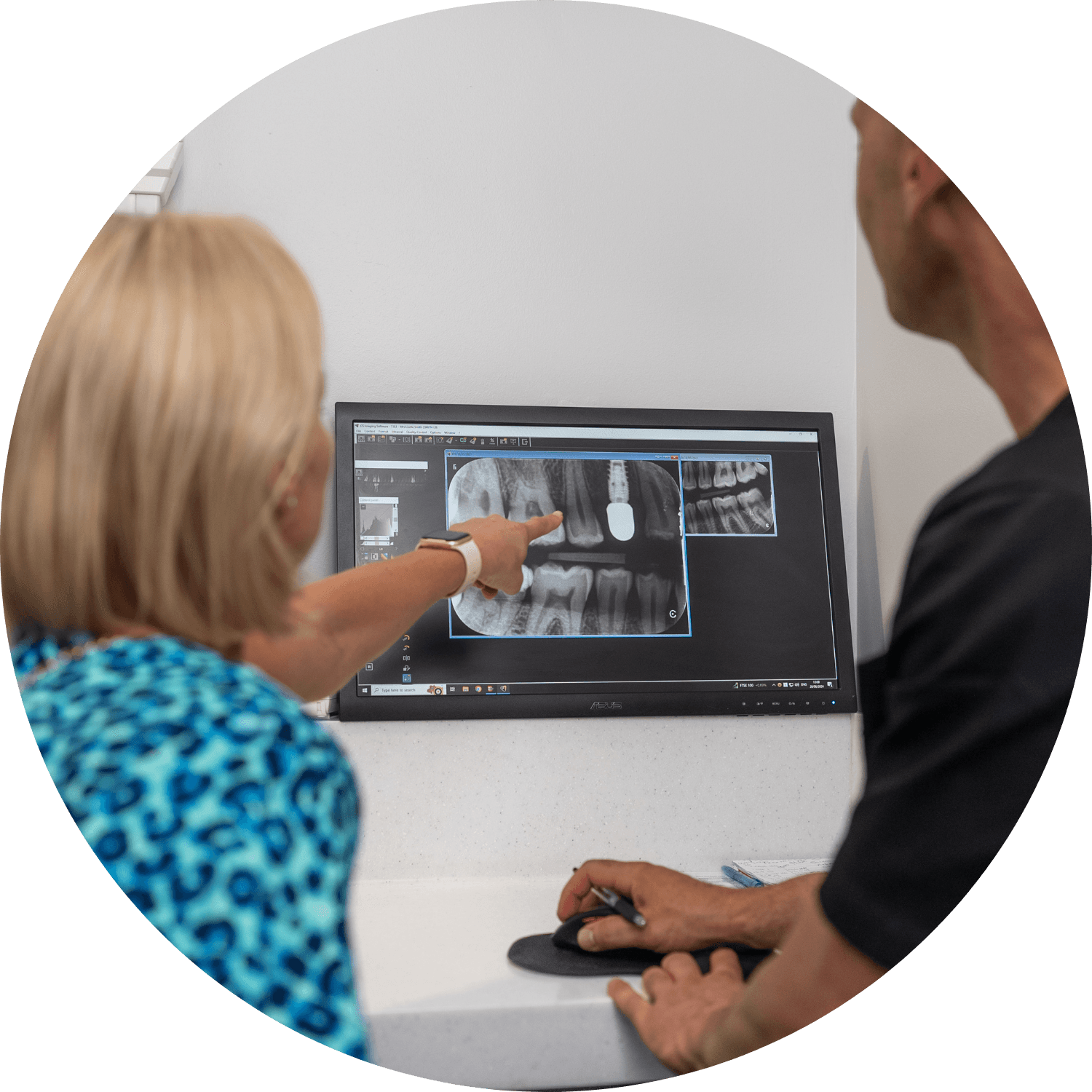
Once the implant has fully integrated, a process known as osseointegration that usually takes 3-6 months, we’ll see you for an integration check-up to confirm it has bonded successfully with the bone. In healthy non-smoking patients, integration succeeds in around 95% of cases.
6th step
Final fitting.
Following successful integration, your custom-made final zirconia crown is fitted. This brings the planning, placement and healing stages together into a tooth that feels right.
Phase 03
Aftercare
5th step
Integration check.
Once the implant has fully integrated, a process known as osseointegration that usually takes 3-6 months, we’ll see you for an integration check-up to confirm it has bonded successfully with the bone. In healthy non-smoking patients, integration succeeds in around 95% of cases.
6th step
Final fitting.
Following successful integration, your custom-made final zirconia crown is fitted. This brings the planning, placement and healing stages together into a tooth that feels right.
Phase 03
Aftercare
5th step
Integration check.
Once the implant has fully integrated, a process known as osseointegration that usually takes 3-6 months, we’ll see you for an integration check-up to confirm it has bonded successfully with the bone. In healthy non-smoking patients, integration succeeds in around 95% of cases.
6th step
Final fitting.
Following successful integration, your custom-made final zirconia crown is fitted. This brings the planning, placement and healing stages together into a tooth that feels right.
Phase 03
Aftercare
Maintenance
Maintenance
Maintenance
Titchfield Dental Clinic Implant Pricing
Titchfield Dental Clinic Implant Pricing
Titchfield Dental Clinic Implant Pricing
Titchfield Dental Clinic Implant Pricing
Our fees are purely indicative. Every case has its own challenges, and because we offer a bespoke service, costs may vary.
You’ll receive a full treatment plan with detailed costings before anything begins.
We also offer flexible finance options, including 0% interest for up to 18 months, or a 5-year payment package with an interest rate of 9.9% APR*.
Our fees are purely indicative. Every case has its own challenges, and because we offer a bespoke service, costs may vary.
You’ll receive a full treatment plan with detailed costings before anything begins.
We also offer flexible finance options, including 0% interest for up to 10 months.
Our fees are purely indicative. Every case has its own challenges, and because we offer a bespoke service, costs may vary.
You’ll receive a full treatment plan with detailed costings before anything begins.
We also offer flexible finance options, including 0% interest for up to 18 months, or a 5-year payment package with an interest rate of 9.9% APR*.
Individual Implant
Individual Implant
Individual Implant
1 Implant
1 Implant
1 Implant
Zirconia crown
Zirconia crown
Zirconia crown
£3500
£3500
£3500
£2,800
£2,800
£2,800
Per Implant
▼ 20% off - Save £700
▼ 20% off - Save £700
▼ 20% off - Save £700
All on 4/6 Full Arch
Dental Implants
All on 4/6 Full Arch
Dental Implants
All on 4/6 Full Arch
Dental Implants
4-6 Implants
4-6 Implants
4-6 Implants
Bespoke Full-Arch Bridge
Bespoke Full-Arch Bridge
Bespoke Full-Arch Bridge
£15,000
£12,000
Per Arch
▼ 20% off - Save £3,000
£15,000
£15,000
£15,000
£12,000
£12,000
£12,000
Per Arch
▼ 20% off - Save £3,000
▼ 20% off - Save £3,000
▼ 20% off - Save £3,000
Why we use BioHorizons®
implants
Why We Use BioHorizons®
Implants
Why we use
BioHorizons® implants
They’re not the biggest name in the UK, but we’ve stuck with BioHorizons because the quality speaks for itself.
Their implants are designed with a surface that helps the bone and gum attach more securely, so they’re less likely to loosen over time. It’s called Laser-Lok® and it’s backed by solid research, not just marketing.
The fit is precise too, which helps reduce movement and stops bacteria getting in where the implant meets the abutment. That means fewer complications down the line.
There are a range of options, each case dependent. They’ve been used for many years and have stood the test of time, so they get our approval.
They’re not the biggest name in the UK, but we’ve stuck with BioHorizons because the quality speaks for itself.
Their implants are designed with a surface that helps the bone and gum attach more securely, so they’re less likely to loosen over time. It’s called Laser-Lok® and it’s backed by solid research, not just marketing.
The fit is precise too, which helps reduce movement and stops bacteria getting in where the implant meets the abutment. That means fewer complications down the line.
There are a range of options, each case dependent. They’ve been used for many years and have stood the test of time, so they get our approval.
Why we use BioHorizons®
implants
They’re not the biggest name in the UK, but we’ve stuck with BioHorizons because the quality speaks for itself.
Their implants are designed with a surface that helps the bone and gum attach more securely, so they’re less likely to loosen over time. It’s called Laser-Lok® and it’s backed by solid research, not just marketing.
The fit is precise too, which helps reduce movement and stops bacteria getting in where the implant meets the abutment. That means fewer complications down the line.
There are a range of options, each case dependent. They’ve been used for many years and have stood the test of time, so they get our approval.

Same-Day Teeth
Single implants and full arches the very same day.
Same-Day Teeth
Single implants and full arches the very same day.
Same-Day Teeth
Single implants and full arches the very same day.

Eat and Smile With Freedom
Discover the difference confidence in your teeth can make.
Eat and Smile With Ease
Feel the difference a confident smile can make.
Eat and Smile With Freedom
Discover the difference confidence in your teeth can make.
Eat and Smile With Freedom
Discover the difference confidence in your teeth can make.
Implants With Little Bone
Our experts can make a lot out of a little.
Implants With Little Bone
We’ll work with what you've got to give you the best results.
Implants With Little Bone
Our experts can make a lot out of a little.
Implants With Little Bone
Our experts can make a lot out of a little.

Lifetime Longevity
High-quality materials for long-lasting results.
Built To Last
High-quality materials for long-lasting results.
Lifetime Longevity
High-quality materials for long-lasting results.
Lifetime Longevity
High-quality materials for long-lasting results.

Interest-Free Financing Available
Spread the cost with our finance options.
Interest-Free Financing Options
Spread the cost with our flexible finance plans.
Interest-Free Financing Available
Spread the cost with our finance options.
0% Financing Available
Spread the cost with our finance options.

Sedation or Anaesthesia
Your choice of local anaesthesia or sedation for your comfort.
Comfort, Your Way
Choose local anaesthesia or sedation for your peace of mind.
Sedation or Anaesthesia
Your choice of local anaesthesia or sedation for your comfort.
Sedation or Anaesthesia
Your choice of local anaesthesia or sedation for your comfort.
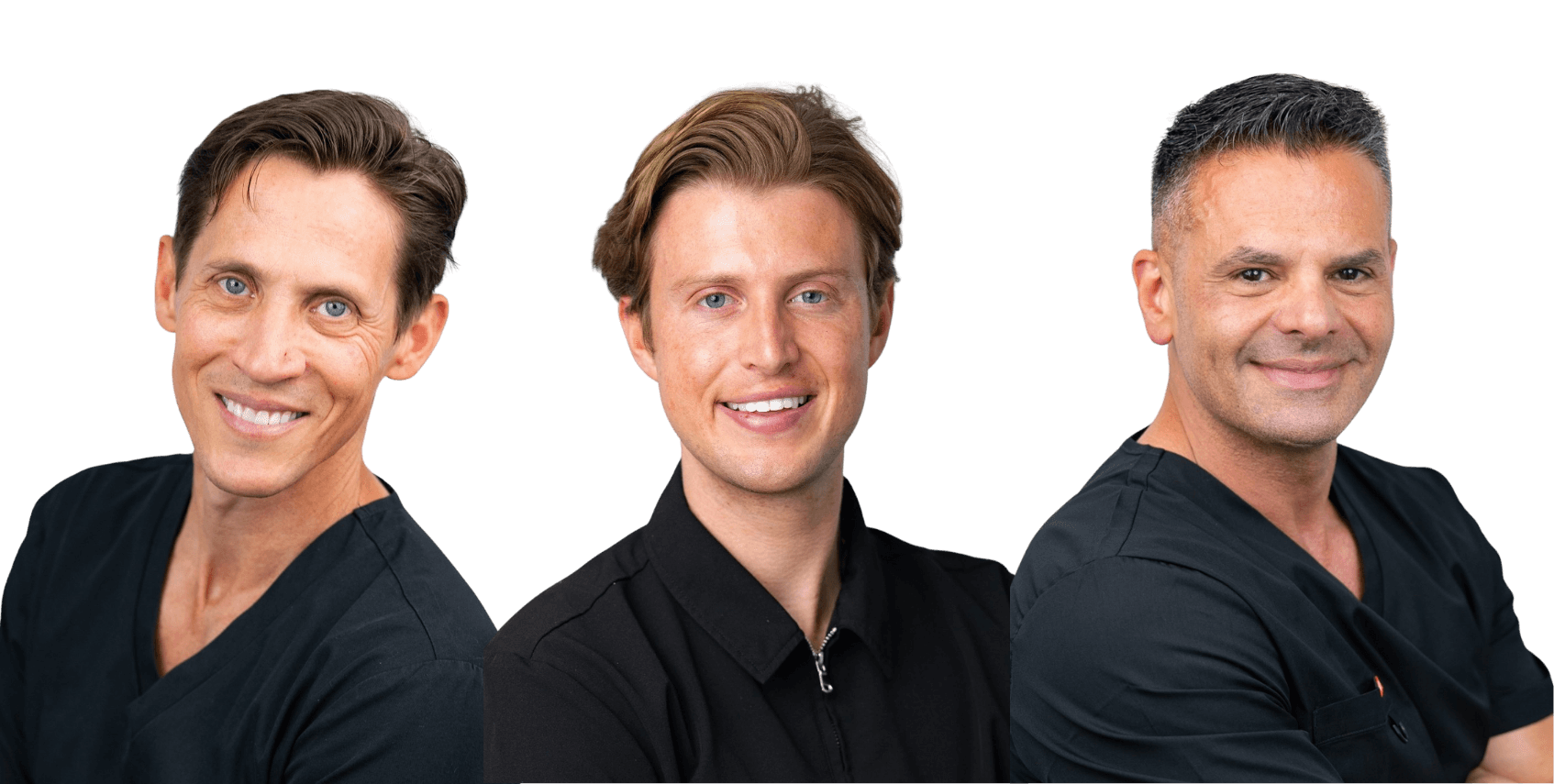
OUR TEAM
Experienced Implant Surgeons
Experienced Implant Surgeons
Experienced Implant Surgeons
Our team isn’t just qualified, they’re committed to getting the job done right. From your first consultation to your ongoing care, we don’t cut corners. You’ll get the proper, professional treatment you deserve. And after your treatment, we’ll be with you for the long run, offering continued support.
Our team isn’t just qualified, they’re committed to getting the job done right. From your first consultation to your ongoing care, we don’t cut corners. You’ll get the proper, professional treatment you deserve. And after your treatment, we’ll be with you for the long run, offering continued support.
Book now
Let’s Get Your Smile Back on Track
Let’s Get Your Smile Back on Track
Let’s Get Your Smile Back on Track
Let’s Get Your Smile Back on Track
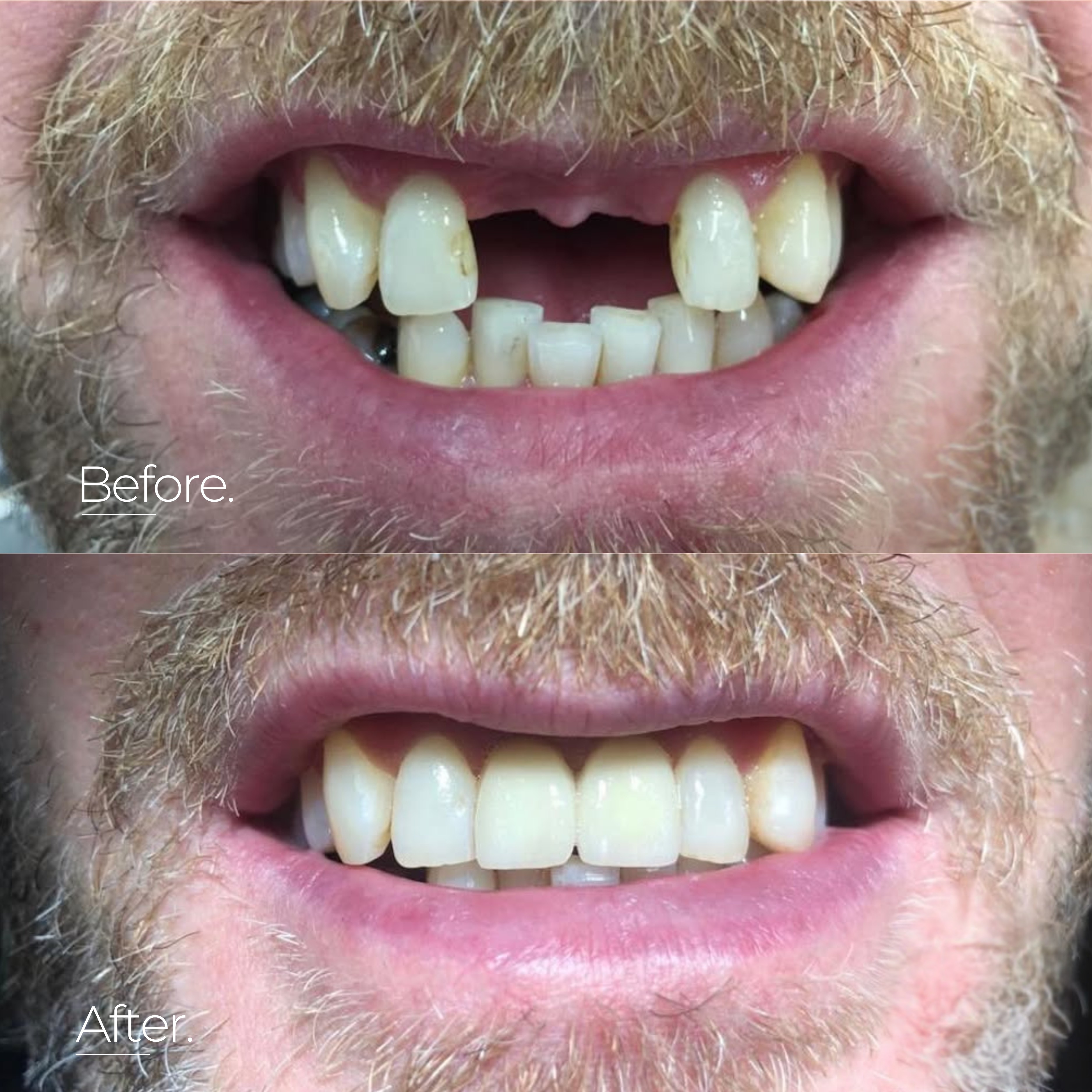
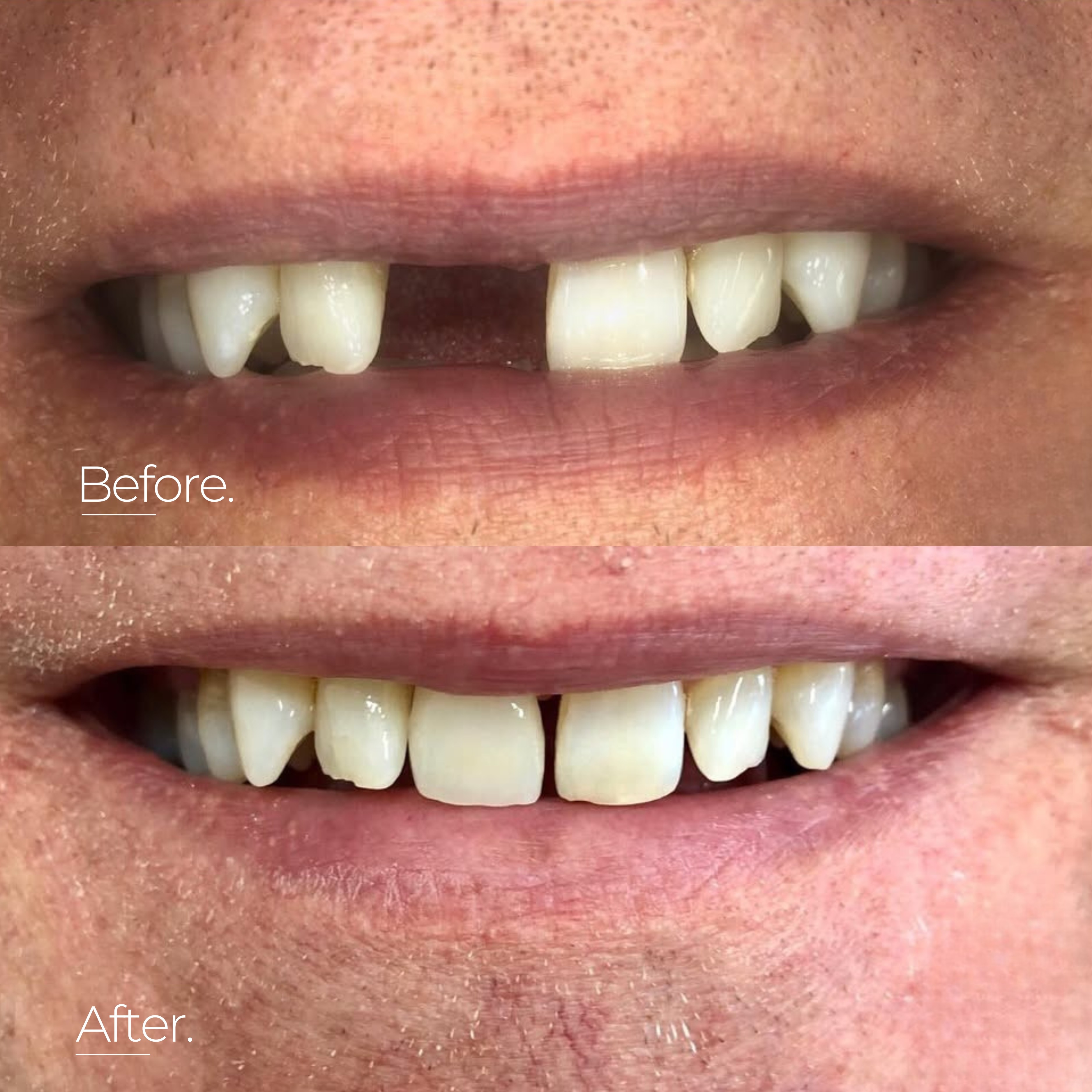
Our implant treatments do more than just fix missing teeth, they can change how you feel about your smile and life overall. We don’t just aim to get the job done; we take the extra time to get it right, making sure your new smile looks natural and feels like it should.
Our implant treatments do more than just fix missing teeth, they can change how you feel about your smile and life overall. We don’t just aim to get the job done; we take the extra time to get it right, making sure your new smile looks natural and feels like it should.
Take a look at some of our recent implant procedures!
Take a look at some of our recent implant procedures!
Enquire today
Dental Implants FAQ
Dental Implants FAQ
Dental Implants FAQ
Want to know more about dental implants? Our FAQ breaks it down into plain English, simple answers to the things people ask us every day.
Want to know more about dental implants? Our FAQ breaks it down into plain English, simple answers to the things people ask us every day.
What are dental implants?
Dental implants are replacements for worn, decaying, painful and missing teeth. The implant is a titanium screw that is inserted through the gum, anchoring into your jaw bone. An abutment is inserted into the implant. The abutment protrudes out of the gum and provides an attachment point for a wide range of crowns, implant bridges and overdentures. Single implants use individual crowns to replace specific teeth. Dental implant bridges and overdentures do not need an implant for each tooth being replaced. Instead these can be secured on a smaller number of implants meaning less surgery for the same result. For example a full arch of teeth can be secured on just 4 implants. This is also called all-on-4 dental implants.
Types of dental implants
There are many types of dental implants suited for a wide range of circumstances. 1. Single Tooth Implant: Ideal for people who want to replace a single tooth or have a tooth missing. 2. Dental Implant Bridge: Ideal for people who want to replace several adjacent teeth or who have a gap spanning 2 or more teeth. 3. Full Mouth Dental Implants: Ideal for people who want to replace a full set of upper and/or lower teeth. This is also called whole mouth dental implants, smile in a day, teeth in a day, all on 4 dental implants or overdentures.
Implants vs dentures
The main difference between dental implants and dentures is that implants can not be removed and are permanently fixed in your mouth. Implants have many benefits over dentures: 1. Implants don’t move. This makes implants more comfortable compared to dentures. It also means you can eat what you like without restriction. 2. Implants are easy to maintain. Brush your implants as you would your normal teeth. Follow the extra steps as outlined by your dentist. 3. Implants don’t affect your jawline. Having teeth removed without implants can cause changes to your jawline. This can potentially make you look older.
Dental implants vs dental bridges
Dental implants offer many advantages compared to dental bridges. 1. Dental bridges are not as discreet as implants. As a result, people may be able to see the structure of your bridge when you smile. 2. Fitting dental bridges may mean permanently altering nearby teeth. This can cause bridges to be a painful choice. 3. Without an implant your gum can lean inwards potentially giving you a puckered face. Dental bridges can wear down quickly resulting in more treatments.
Who can have dental implants?
Dental implants are a great choice for most people however not everyone is suitable for this treatment. You may not be able to have dental implants if you… 1. Have radiotherapy in or around your jaw 2. Have diabetes 3. Smoke, use chewing tobacco or vape 4. Drink heavily 5. Take recreational drugs 6. Have gum disease Please be honest when visiting your dentist for an assessment to make sure the right treatment is recommended to you.
What can stop me from having dental implants?
There are many conditions that could stop you from having dental implants these include: 1. Diabetes impacts the body’s ability to heal and could impact your recovery 2. Autoimmune disorders including rheumatoid arthritis and lupus can affect your recovery 3. Heart Conditions can be triggered by anaesthesia or sedation 4. Bone Disorders including osteoporosis and osteogenesis imperfecta can impact the long term success of your treatment
Will I need bone grafting for dental implants?
You need to have sufficient bone in your jaw to allow implants to securely anchor in place. If you’re lacking in bone density a bone graft can help. Bone grafts can take from to 3 – 6 months to heal before implant treatments can begin. This will be discussed at your dental consultation.
Will I need a sinus lift
A sinus lift or maxillary sinus floor augmentation surgery is a treatment designed to increase bone density around your back teeth in your upper jaw. Prolonged tooth loss in this region can degrade your bone and cause implants to fail. A sinus lift provides a secure anchor point for dental implants.
Dental implant procedure
1. The dental implant procedure starts with the removal of your teeth (if required). 2. An incision is made into your gum and the titanium implant is screwed into your jaw bone. 3. An abutment is screwed into the implant. This protrudes above your gumline. If you’re having a single implant a crown is secured to the abutment. If you’re having an implant bridge or overdenture multiple implants and abutments will be used. 4. You will then be fitted with a temporary bridge or overdenture while your permanent replacement is made.This entire process takes less than a day 5. Your gum is left for several months to heal 6. Your new teeth are fitted and adjustments are made. 7. Your final teeth are fitted.
Dental implant process
The process of getting dental implants is simple. 1. Consultation: we will discuss your requirements and assess your teeth and jaw to ensure you are suitable for treatment. If gum disease or bone loss has occurred additional treatments may be required before dental implants can be fitted. 2. Surgery: Your implants, abutments and crowns/temporary bridges or overdentures will be fitted. 3. Recovery: Your gums will heal over the next few months. 4. Adjustment: Your final bridge/overdenture will be fitted and adjustments made. 5. Final fitting: Your new permanent bridge/overdenture will be fitted, giving you a beautiful straight white smile.
How long do dental implants take
From single tooth implants to implant bridges and full mouth dental implants, surgery takes just 1 day to give you a new set of teeth. For bridges and overdentures this will mean wearing temporary teeth until your gums have healed. It will take several months for your gums to fully heal. Bridges and overdentures take additional time to fully adjust and fit your final set of teeth.
How long does it take to recover from dental implants
It usually takes 2 weeks for patients to fully recover from dental implant surgery. The full healing process takes between 3 and 6 months.
What are single tooth implants
A single tooth implant replaces a single or missing tooth with a new ceramic replacement. The implant is secured through your gum into your jaw bone. An abutment is secured into the implant providing a base for the crown to be attached. Crowns are tailored to match your natural teeth and help strengthen your jaw giving you a natural smile. The entire process takes just a few hours.
What are multiple tooth implants
Multiple tooth implants replaces a row of teeth with a dental implant bridge. This can mean using fewer implants than the number of teeth being replaced. The implants are secured through your gum into your jaw bone. Abutments are secured into the implant providing anchor points for the bridge to be attached. The dental implant bridge is tailored to match your natural teeth with the implants helping to strengthen your jaw giving you a natural smile. The initial process takes just a few hours to fit your temporary bridge. After your gums have healed your final custom implant bridge will be fitted and adjusted before your final fitting.
What are full mouth dental implants
Full mouth dental implants replace your entire upper and/or lower set of teeth with an overdenture. This means using fewer implants than the number of teeth being replaced. The implants are secured through your gum into your jaw bone. Abutments are secured into the implant providing anchor points for the overdenture to be attached. The overdenture is tailored to match your natural teeth with the implants helping to strengthen your jaw giving you a natural smile. The initial surgery and fitting of your temporary overdenture is completed in just 1 day. After your gums have healed your final custom overdenture will be fitted and adjusted before your final fitting.
What are all on 4 dental implants
All on 4 dental implants uses 4 implants to secure a full arch of around 10 teeth to your upper jaw. This is the minimum amount of implants required to make upper jaw teeth replacement a success.
What are all on 6 dental implants
All on 6 dental implants uses 6 implants to secure a full arch of around 10 teeth to your upper or lower jaw. It is used when more anchor points are required to make dental implant surgery successful.
What is teeth in a day
Teeth in a day is the name given to whole mouth dental implants surgery. At the end of your procedure, you will have a temporary set of dental implants secured to your jaw. This allows your gums and jaw to fully heal before your final implant arch can be fitted.
What are implant supported bridges
Implant supported bridges replaces a row of teeth with a dental implant bridge. This can mean using fewer implants than the number of teeth being replaced. At the end of your procedure, you will have a temporary implant bridge secured to your jaw. This allows your gums and jaw to fully heal before your final implant bridge can be fitted.
What are implant supported dentures
Implant supported dentures replace your entire upper and/or lower set of teeth with a permanent denture secured to your jaw using titanium implants. Implant supported dentures use 4, 6 or 8 titanium implants to secure a full arch of teeth giving you a beautiful straight white smile. This means using fewer implants than the number of teeth being replaced. The implants are secured through your gum into your jaw bone.
What is an overdenture
An overdenture replaces your entire upper and/or lower set of teeth with a permanent denture secured to your jaw using titanium implants. Overdentures use 4, 6 or 8 titanium implants to secure a full arch of teeth giving you a beautiful straight white smile. This means using fewer implants than the number of teeth being replaced. The implants are secured through your gum into your jaw bone.
The functional benefits of dental implants
There are many functional benefits to getting dental implants including: 1. Gives you the ability to chew again without pain. 2. Stops bone loss from your jaw bone and upper jaw line. 3. Maintains the health of surrounding gums and teeth. 4. Helps to keep adjacent teeth stable and aligned. 5. Natural mouth feel. 6. Potentially improves your quality of life.
The aesthetic benefits of dental implants
There are many aesthetic benefits to getting dental implants including: 1. Fills gaps in your smile with new teeth. 2. Replace worn, misaligned, crowded and discoloured teeth with new white teeth. 3. Preserves your jawline potentially making you look more youthful.
How durable are dental implants
Dental implants are very durable. 90-95% of implants last more than 10 years and with proper care can last over 20 years. The main weak point of dental crowns is the crown, not the implant. Crowns can become worn or cracked however, this element can easily be replaced, often without surgery.
How to maintain dental implants
Follow these steps to help maintain your dental implants: 1. Stop smoking, it stains your teeth, slows recovery and affects bone density 2. Avoid chewing on hard foods like ice, your implants are strong but can be damaged just like natural teeth 3. Brush your teeth twice a day using a soft toothbrush and a fluoride toothpaste – avoid abrasive toothpastes. 4. Use mouthwash to help prevent gum disease. 5. Floss daily. 6. Visit your dentist regularly for check ups.
How much does a single tooth implants cost
Single tooth dental implants cost from £2,800 per implant. This covers a grade 3 titanium implant, abutment and crown designed to replace individual teeth.
How much do multiple dental implants cost
The cost of multiple implants varies depending on the number of teeth and type of implants being fitted. Our cheapest dental implants cost from £11,996, cover up to 6 teeth, use a surgical grade 3 titanium implant and an acrylic bridge. Our most popular dental implants cost from £15,996 cover up to 8 teeth, use a surgical grade 3 titanium implant and an aesthetic monolythic zirconia bridge. Our premium dental implants cost from £29,996 cover up to 10 teeth, use a surgical grade 3 titanium implant and a diamond cut zirconia bridge with individually set crowns.
How much do full mouth dental implants cost
The cost of full mouth implants covering both upper and lower teeth varies depending on the number of teeth and type of implants being fitted. Our cheapest full mouth dental implants cost from £18,996 cover up to 12 teeth, use a surgical grade 3 titanium implant and an acrylic bridge. Our most popular full mouth dental implants cost from £26,996 cover up to 16 teeth, use a surgical grade 3 titanium implant and an ultra aesthetic monolythic zirconia bridge. Our premium full mouth dental implants cost from £49,996 cover up to 20 teeth, use a surgical grade 3 titanium implant and a diamond cut zirconia bridge with individually set crowns.
How much do all on 4 dental implants cost
The cost of all on 4 dental implants varies depending on the number of teeth and type of implants being fitted. Our most popular all on 4 dental implants cost from £15,996 cover up to 8 teeth, use a surgical grade 3 titanium implant and an ultra aesthetic monolythic zirconia bridge. Our premium all on 4 dental implants cost from £29,996 cover up to 10 teeth, use a surgical grade 3 titanium implant and a diamond cut zirconia bridge with individually set crowns.
What affects the cost of dental implants
The cost of dental implants can be affected by the number of teeth requiring implantation, the condition of your teeth, gums and jaw, the type of bridge/overdenture used and time needed to complete the procedure.
Dental implant finance
Get dental implants on finance with Titchfield Dental Clinic. We offer short term finance on dental implants with 0% interest and finance over 24 months from 9.9% APR. Get in touch today to discuss your options.
Dental implant payment plans
Payment plan allows you to spread the cost of dental implants over 2 years at 0% APR. Get in touch to discuss your options.
Is It painful to get dental implants?
During your dental implant surgery the use of local anaesthetic or sedation means you will feel minimal pain. After your dental implant surgery your gums will need to heal. This can take several weeks and can be painful. Speak to your dentist about post operation pain relief which can include low cost over the counter pain medication.
How long do dental implants last?
With proper care dental implants can easily last 10-20 years without issue. Like natural teeth they’re not indestructible with the most common issue being damage to the crowns. Your dentist can easily replace damaged crowns further prolonging the life span of your implants.
Risks and Complications of Dental Implants
Having dental implants is not without risk. Our team of experienced Implant dentists have processes in place to help mitigate the risk of: 1. Infection 2. Injury to teeth and blood vessels 3. Nerve damage 4. Sinus problems Please talk to your dentist if you are worried about any of the above risks.
What happens if dental implants fail?
Dental implants can fail if the implant does not correctly attach to your jaw. The good news is that your gum is one of the fastest areas of the body to recover from injury. As a result your doctor will simply book you in for a second procedure after your gums have fully healed.
What are dental implants?
Dental implants are replacements for worn, decaying, painful and missing teeth. The implant is a titanium screw that is inserted through the gum, anchoring into your jaw bone. An abutment is inserted into the implant. The abutment protrudes out of the gum and provides an attachment point for a wide range of crowns, implant bridges and overdentures. Single implants use individual crowns to replace specific teeth. Dental implant bridges and overdentures do not need an implant for each tooth being replaced. Instead these can be secured on a smaller number of implants meaning less surgery for the same result. For example a full arch of teeth can be secured on just 4 implants. This is also called all-on-4 dental implants.
Types of dental implants
There are many types of dental implants suited for a wide range of circumstances. 1. Single Tooth Implant: Ideal for people who want to replace a single tooth or have a tooth missing. 2. Dental Implant Bridge: Ideal for people who want to replace several adjacent teeth or who have a gap spanning 2 or more teeth. 3. Full Mouth Dental Implants: Ideal for people who want to replace a full set of upper and/or lower teeth. This is also called whole mouth dental implants, smile in a day, teeth in a day, all on 4 dental implants or overdentures.
Implants vs dentures
The main difference between dental implants and dentures is that implants can not be removed and are permanently fixed in your mouth. Implants have many benefits over dentures: 1. Implants don’t move. This makes implants more comfortable compared to dentures. It also means you can eat what you like without restriction. 2. Implants are easy to maintain. Brush your implants as you would your normal teeth. Follow the extra steps as outlined by your dentist. 3. Implants don’t affect your jawline. Having teeth removed without implants can cause changes to your jawline. This can potentially make you look older.
Dental implants vs dental bridges
Dental implants offer many advantages compared to dental bridges. 1. Dental bridges are not as discreet as implants. As a result, people may be able to see the structure of your bridge when you smile. 2. Fitting dental bridges may mean permanently altering nearby teeth. This can cause bridges to be a painful choice. 3. Without an implant your gum can lean inwards potentially giving you a puckered face. Dental bridges can wear down quickly resulting in more treatments.
Who can have dental implants?
Dental implants are a great choice for most people however not everyone is suitable for this treatment. You may not be able to have dental implants if you… 1. Have radiotherapy in or around your jaw 2. Have diabetes 3. Smoke, use chewing tobacco or vape 4. Drink heavily 5. Take recreational drugs 6. Have gum disease Please be honest when visiting your dentist for an assessment to make sure the right treatment is recommended to you.
What can stop me from having dental implants?
There are many conditions that could stop you from having dental implants these include: 1. Diabetes impacts the body’s ability to heal and could impact your recovery 2. Autoimmune disorders including rheumatoid arthritis and lupus can affect your recovery 3. Heart Conditions can be triggered by anaesthesia or sedation 4. Bone Disorders including osteoporosis and osteogenesis imperfecta can impact the long term success of your treatment
Will I need bone grafting for dental implants?
You need to have sufficient bone in your jaw to allow implants to securely anchor in place. If you’re lacking in bone density a bone graft can help. Bone grafts can take from to 3 – 6 months to heal before implant treatments can begin. This will be discussed at your dental consultation.
Will I need a sinus lift
A sinus lift or maxillary sinus floor augmentation surgery is a treatment designed to increase bone density around your back teeth in your upper jaw. Prolonged tooth loss in this region can degrade your bone and cause implants to fail. A sinus lift provides a secure anchor point for dental implants.
Dental implant procedure
1. The dental implant procedure starts with the removal of your teeth (if required). 2. An incision is made into your gum and the titanium implant is screwed into your jaw bone. 3. An abutment is screwed into the implant. This protrudes above your gumline. If you’re having a single implant a crown is secured to the abutment. If you’re having an implant bridge or overdenture multiple implants and abutments will be used. 4. You will then be fitted with a temporary bridge or overdenture while your permanent replacement is made.This entire process takes less than a day 5. Your gum is left for several months to heal 6. Your new teeth are fitted and adjustments are made. 7. Your final teeth are fitted.
Dental implant process
The process of getting dental implants is simple. 1. Consultation: we will discuss your requirements and assess your teeth and jaw to ensure you are suitable for treatment. If gum disease or bone loss has occurred additional treatments may be required before dental implants can be fitted. 2. Surgery: Your implants, abutments and crowns/temporary bridges or overdentures will be fitted. 3. Recovery: Your gums will heal over the next few months. 4. Adjustment: Your final bridge/overdenture will be fitted and adjustments made. 5. Final fitting: Your new permanent bridge/overdenture will be fitted, giving you a beautiful straight white smile.
How long do dental implants take
From single tooth implants to implant bridges and full mouth dental implants, surgery takes just 1 day to give you a new set of teeth. For bridges and overdentures this will mean wearing temporary teeth until your gums have healed. It will take several months for your gums to fully heal. Bridges and overdentures take additional time to fully adjust and fit your final set of teeth.
How long does it take to recover from dental implants
It usually takes 2 weeks for patients to fully recover from dental implant surgery. The full healing process takes between 3 and 6 months.
What are single tooth implants
A single tooth implant replaces a single or missing tooth with a new ceramic replacement. The implant is secured through your gum into your jaw bone. An abutment is secured into the implant providing a base for the crown to be attached. Crowns are tailored to match your natural teeth and help strengthen your jaw giving you a natural smile. The entire process takes just a few hours.
What are multiple tooth implants
Multiple tooth implants replaces a row of teeth with a dental implant bridge. This can mean using fewer implants than the number of teeth being replaced. The implants are secured through your gum into your jaw bone. Abutments are secured into the implant providing anchor points for the bridge to be attached. The dental implant bridge is tailored to match your natural teeth with the implants helping to strengthen your jaw giving you a natural smile. The initial process takes just a few hours to fit your temporary bridge. After your gums have healed your final custom implant bridge will be fitted and adjusted before your final fitting.
What are full mouth dental implants
Full mouth dental implants replace your entire upper and/or lower set of teeth with an overdenture. This means using fewer implants than the number of teeth being replaced. The implants are secured through your gum into your jaw bone. Abutments are secured into the implant providing anchor points for the overdenture to be attached. The overdenture is tailored to match your natural teeth with the implants helping to strengthen your jaw giving you a natural smile. The initial surgery and fitting of your temporary overdenture is completed in just 1 day. After your gums have healed your final custom overdenture will be fitted and adjusted before your final fitting.
What are all on 4 dental implants
All on 4 dental implants uses 4 implants to secure a full arch of around 10 teeth to your upper jaw. This is the minimum amount of implants required to make upper jaw teeth replacement a success.
What are all on 6 dental implants
All on 6 dental implants uses 6 implants to secure a full arch of around 10 teeth to your upper or lower jaw. It is used when more anchor points are required to make dental implant surgery successful.
What is teeth in a day
Teeth in a day is the name given to whole mouth dental implants surgery. At the end of your procedure, you will have a temporary set of dental implants secured to your jaw. This allows your gums and jaw to fully heal before your final implant arch can be fitted.
What are implant supported bridges
Implant supported bridges replaces a row of teeth with a dental implant bridge. This can mean using fewer implants than the number of teeth being replaced. At the end of your procedure, you will have a temporary implant bridge secured to your jaw. This allows your gums and jaw to fully heal before your final implant bridge can be fitted.
What are implant supported dentures
Implant supported dentures replace your entire upper and/or lower set of teeth with a permanent denture secured to your jaw using titanium implants. Implant supported dentures use 4, 6 or 8 titanium implants to secure a full arch of teeth giving you a beautiful straight white smile. This means using fewer implants than the number of teeth being replaced. The implants are secured through your gum into your jaw bone.
What is an overdenture
An overdenture replaces your entire upper and/or lower set of teeth with a permanent denture secured to your jaw using titanium implants. Overdentures use 4, 6 or 8 titanium implants to secure a full arch of teeth giving you a beautiful straight white smile. This means using fewer implants than the number of teeth being replaced. The implants are secured through your gum into your jaw bone.
The functional benefits of dental implants
There are many functional benefits to getting dental implants including: 1. Gives you the ability to chew again without pain. 2. Stops bone loss from your jaw bone and upper jaw line. 3. Maintains the health of surrounding gums and teeth. 4. Helps to keep adjacent teeth stable and aligned. 5. Natural mouth feel. 6. Potentially improves your quality of life.
The aesthetic benefits of dental implants
There are many aesthetic benefits to getting dental implants including: 1. Fills gaps in your smile with new teeth. 2. Replace worn, misaligned, crowded and discoloured teeth with new white teeth. 3. Preserves your jawline potentially making you look more youthful.
How durable are dental implants
Dental implants are very durable. 90-95% of implants last more than 10 years and with proper care can last over 20 years. The main weak point of dental crowns is the crown, not the implant. Crowns can become worn or cracked however, this element can easily be replaced, often without surgery.
How to maintain dental implants
Follow these steps to help maintain your dental implants: 1. Stop smoking, it stains your teeth, slows recovery and affects bone density 2. Avoid chewing on hard foods like ice, your implants are strong but can be damaged just like natural teeth 3. Brush your teeth twice a day using a soft toothbrush and a fluoride toothpaste – avoid abrasive toothpastes. 4. Use mouthwash to help prevent gum disease. 5. Floss daily. 6. Visit your dentist regularly for check ups.
How much does a single tooth implants cost
Single tooth dental implants cost from £2,800 per implant. This covers a grade 3 titanium implant, abutment and crown designed to replace individual teeth.
How much do multiple dental implants cost
The cost of multiple implants varies depending on the number of teeth and type of implants being fitted. Our cheapest dental implants cost from £11,996, cover up to 6 teeth, use a surgical grade 3 titanium implant and an acrylic bridge. Our most popular dental implants cost from £15,996 cover up to 8 teeth, use a surgical grade 3 titanium implant and an aesthetic monolythic zirconia bridge. Our premium dental implants cost from £29,996 cover up to 10 teeth, use a surgical grade 3 titanium implant and a diamond cut zirconia bridge with individually set crowns.
How much do full mouth dental implants cost
The cost of full mouth implants covering both upper and lower teeth varies depending on the number of teeth and type of implants being fitted. Our cheapest full mouth dental implants cost from £18,996 cover up to 12 teeth, use a surgical grade 3 titanium implant and an acrylic bridge. Our most popular full mouth dental implants cost from £26,996 cover up to 16 teeth, use a surgical grade 3 titanium implant and an ultra aesthetic monolythic zirconia bridge. Our premium full mouth dental implants cost from £49,996 cover up to 20 teeth, use a surgical grade 3 titanium implant and a diamond cut zirconia bridge with individually set crowns.
How much do all on 4 dental implants cost
The cost of all on 4 dental implants varies depending on the number of teeth and type of implants being fitted. Our most popular all on 4 dental implants cost from £15,996 cover up to 8 teeth, use a surgical grade 3 titanium implant and an ultra aesthetic monolythic zirconia bridge. Our premium all on 4 dental implants cost from £29,996 cover up to 10 teeth, use a surgical grade 3 titanium implant and a diamond cut zirconia bridge with individually set crowns.
What affects the cost of dental implants
The cost of dental implants can be affected by the number of teeth requiring implantation, the condition of your teeth, gums and jaw, the type of bridge/overdenture used and time needed to complete the procedure.
Dental implant finance
Get dental implants on finance with Titchfield Dental Clinic. We offer short term finance on dental implants with 0% interest and finance over 24 months from 9.9% APR. Get in touch today to discuss your options.
Dental implant payment plans
Payment plan allows you to spread the cost of dental implants over 2 years at 0% APR. Get in touch to discuss your options.
Is It painful to get dental implants?
During your dental implant surgery the use of local anaesthetic or sedation means you will feel minimal pain. After your dental implant surgery your gums will need to heal. This can take several weeks and can be painful. Speak to your dentist about post operation pain relief which can include low cost over the counter pain medication.
How long do dental implants last?
With proper care dental implants can easily last 10-20 years without issue. Like natural teeth they’re not indestructible with the most common issue being damage to the crowns. Your dentist can easily replace damaged crowns further prolonging the life span of your implants.
Risks and Complications of Dental Implants
Having dental implants is not without risk. Our team of experienced Implant dentists have processes in place to help mitigate the risk of: 1. Infection 2. Injury to teeth and blood vessels 3. Nerve damage 4. Sinus problems Please talk to your dentist if you are worried about any of the above risks.
What happens if dental implants fail?
Dental implants can fail if the implant does not correctly attach to your jaw. The good news is that your gum is one of the fastest areas of the body to recover from injury. As a result your doctor will simply book you in for a second procedure after your gums have fully healed.
What are dental implants?
Dental implants are replacements for worn, decaying, painful and missing teeth. The implant is a titanium screw that is inserted through the gum, anchoring into your jaw bone. An abutment is inserted into the implant. The abutment protrudes out of the gum and provides an attachment point for a wide range of crowns, implant bridges and overdentures. Single implants use individual crowns to replace specific teeth. Dental implant bridges and overdentures do not need an implant for each tooth being replaced. Instead these can be secured on a smaller number of implants meaning less surgery for the same result. For example a full arch of teeth can be secured on just 4 implants. This is also called all-on-4 dental implants.
Types of dental implants
There are many types of dental implants suited for a wide range of circumstances. 1. Single Tooth Implant: Ideal for people who want to replace a single tooth or have a tooth missing. 2. Dental Implant Bridge: Ideal for people who want to replace several adjacent teeth or who have a gap spanning 2 or more teeth. 3. Full Mouth Dental Implants: Ideal for people who want to replace a full set of upper and/or lower teeth. This is also called whole mouth dental implants, smile in a day, teeth in a day, all on 4 dental implants or overdentures.
Implants vs dentures
The main difference between dental implants and dentures is that implants can not be removed and are permanently fixed in your mouth. Implants have many benefits over dentures: 1. Implants don’t move. This makes implants more comfortable compared to dentures. It also means you can eat what you like without restriction. 2. Implants are easy to maintain. Brush your implants as you would your normal teeth. Follow the extra steps as outlined by your dentist. 3. Implants don’t affect your jawline. Having teeth removed without implants can cause changes to your jawline. This can potentially make you look older.
Dental implants vs dental bridges
Dental implants offer many advantages compared to dental bridges. 1. Dental bridges are not as discreet as implants. As a result, people may be able to see the structure of your bridge when you smile. 2. Fitting dental bridges may mean permanently altering nearby teeth. This can cause bridges to be a painful choice. 3. Without an implant your gum can lean inwards potentially giving you a puckered face. Dental bridges can wear down quickly resulting in more treatments.
Who can have dental implants?
Dental implants are a great choice for most people however not everyone is suitable for this treatment. You may not be able to have dental implants if you… 1. Have radiotherapy in or around your jaw 2. Have diabetes 3. Smoke, use chewing tobacco or vape 4. Drink heavily 5. Take recreational drugs 6. Have gum disease Please be honest when visiting your dentist for an assessment to make sure the right treatment is recommended to you.
What can stop me from having dental implants?
There are many conditions that could stop you from having dental implants these include: 1. Diabetes impacts the body’s ability to heal and could impact your recovery 2. Autoimmune disorders including rheumatoid arthritis and lupus can affect your recovery 3. Heart Conditions can be triggered by anaesthesia or sedation 4. Bone Disorders including osteoporosis and osteogenesis imperfecta can impact the long term success of your treatment
Will I need bone grafting for dental implants?
You need to have sufficient bone in your jaw to allow implants to securely anchor in place. If you’re lacking in bone density a bone graft can help. Bone grafts can take from to 3 – 6 months to heal before implant treatments can begin. This will be discussed at your dental consultation.
Will I need a sinus lift
A sinus lift or maxillary sinus floor augmentation surgery is a treatment designed to increase bone density around your back teeth in your upper jaw. Prolonged tooth loss in this region can degrade your bone and cause implants to fail. A sinus lift provides a secure anchor point for dental implants.
Dental implant procedure
1. The dental implant procedure starts with the removal of your teeth (if required). 2. An incision is made into your gum and the titanium implant is screwed into your jaw bone. 3. An abutment is screwed into the implant. This protrudes above your gumline. If you’re having a single implant a crown is secured to the abutment. If you’re having an implant bridge or overdenture multiple implants and abutments will be used. 4. You will then be fitted with a temporary bridge or overdenture while your permanent replacement is made.This entire process takes less than a day 5. Your gum is left for several months to heal 6. Your new teeth are fitted and adjustments are made. 7. Your final teeth are fitted.
Dental implant process
The process of getting dental implants is simple. 1. Consultation: we will discuss your requirements and assess your teeth and jaw to ensure you are suitable for treatment. If gum disease or bone loss has occurred additional treatments may be required before dental implants can be fitted. 2. Surgery: Your implants, abutments and crowns/temporary bridges or overdentures will be fitted. 3. Recovery: Your gums will heal over the next few months. 4. Adjustment: Your final bridge/overdenture will be fitted and adjustments made. 5. Final fitting: Your new permanent bridge/overdenture will be fitted, giving you a beautiful straight white smile.
How long do dental implants take
From single tooth implants to implant bridges and full mouth dental implants, surgery takes just 1 day to give you a new set of teeth. For bridges and overdentures this will mean wearing temporary teeth until your gums have healed. It will take several months for your gums to fully heal. Bridges and overdentures take additional time to fully adjust and fit your final set of teeth.
How long does it take to recover from dental implants
It usually takes 2 weeks for patients to fully recover from dental implant surgery. The full healing process takes between 3 and 6 months.
What are single tooth implants
A single tooth implant replaces a single or missing tooth with a new ceramic replacement. The implant is secured through your gum into your jaw bone. An abutment is secured into the implant providing a base for the crown to be attached. Crowns are tailored to match your natural teeth and help strengthen your jaw giving you a natural smile. The entire process takes just a few hours.
What are multiple tooth implants
Multiple tooth implants replaces a row of teeth with a dental implant bridge. This can mean using fewer implants than the number of teeth being replaced. The implants are secured through your gum into your jaw bone. Abutments are secured into the implant providing anchor points for the bridge to be attached. The dental implant bridge is tailored to match your natural teeth with the implants helping to strengthen your jaw giving you a natural smile. The initial process takes just a few hours to fit your temporary bridge. After your gums have healed your final custom implant bridge will be fitted and adjusted before your final fitting.
What are full mouth dental implants
Full mouth dental implants replace your entire upper and/or lower set of teeth with an overdenture. This means using fewer implants than the number of teeth being replaced. The implants are secured through your gum into your jaw bone. Abutments are secured into the implant providing anchor points for the overdenture to be attached. The overdenture is tailored to match your natural teeth with the implants helping to strengthen your jaw giving you a natural smile. The initial surgery and fitting of your temporary overdenture is completed in just 1 day. After your gums have healed your final custom overdenture will be fitted and adjusted before your final fitting.
What are all on 4 dental implants
All on 4 dental implants uses 4 implants to secure a full arch of around 10 teeth to your upper jaw. This is the minimum amount of implants required to make upper jaw teeth replacement a success.
What are all on 6 dental implants
All on 6 dental implants uses 6 implants to secure a full arch of around 10 teeth to your upper or lower jaw. It is used when more anchor points are required to make dental implant surgery successful.
What is teeth in a day
Teeth in a day is the name given to whole mouth dental implants surgery. At the end of your procedure, you will have a temporary set of dental implants secured to your jaw. This allows your gums and jaw to fully heal before your final implant arch can be fitted.
What are implant supported bridges
Implant supported bridges replaces a row of teeth with a dental implant bridge. This can mean using fewer implants than the number of teeth being replaced. At the end of your procedure, you will have a temporary implant bridge secured to your jaw. This allows your gums and jaw to fully heal before your final implant bridge can be fitted.
What are implant supported dentures
Implant supported dentures replace your entire upper and/or lower set of teeth with a permanent denture secured to your jaw using titanium implants. Implant supported dentures use 4, 6 or 8 titanium implants to secure a full arch of teeth giving you a beautiful straight white smile. This means using fewer implants than the number of teeth being replaced. The implants are secured through your gum into your jaw bone.
What is an overdenture
An overdenture replaces your entire upper and/or lower set of teeth with a permanent denture secured to your jaw using titanium implants. Overdentures use 4, 6 or 8 titanium implants to secure a full arch of teeth giving you a beautiful straight white smile. This means using fewer implants than the number of teeth being replaced. The implants are secured through your gum into your jaw bone.
The functional benefits of dental implants
There are many functional benefits to getting dental implants including: 1. Gives you the ability to chew again without pain. 2. Stops bone loss from your jaw bone and upper jaw line. 3. Maintains the health of surrounding gums and teeth. 4. Helps to keep adjacent teeth stable and aligned. 5. Natural mouth feel. 6. Potentially improves your quality of life.
The aesthetic benefits of dental implants
There are many aesthetic benefits to getting dental implants including: 1. Fills gaps in your smile with new teeth. 2. Replace worn, misaligned, crowded and discoloured teeth with new white teeth. 3. Preserves your jawline potentially making you look more youthful.
How durable are dental implants
Dental implants are very durable. 90-95% of implants last more than 10 years and with proper care can last over 20 years. The main weak point of dental crowns is the crown, not the implant. Crowns can become worn or cracked however, this element can easily be replaced, often without surgery.
How to maintain dental implants
Follow these steps to help maintain your dental implants: 1. Stop smoking, it stains your teeth, slows recovery and affects bone density 2. Avoid chewing on hard foods like ice, your implants are strong but can be damaged just like natural teeth 3. Brush your teeth twice a day using a soft toothbrush and a fluoride toothpaste – avoid abrasive toothpastes. 4. Use mouthwash to help prevent gum disease. 5. Floss daily. 6. Visit your dentist regularly for check ups.
How much does a single tooth implants cost
Single tooth dental implants cost from £2,800 per implant. This covers a grade 3 titanium implant, abutment and crown designed to replace individual teeth.
How much do multiple dental implants cost
The cost of multiple implants varies depending on the number of teeth and type of implants being fitted. Our cheapest dental implants cost from £11,996, cover up to 6 teeth, use a surgical grade 3 titanium implant and an acrylic bridge. Our most popular dental implants cost from £15,996 cover up to 8 teeth, use a surgical grade 3 titanium implant and an aesthetic monolythic zirconia bridge. Our premium dental implants cost from £29,996 cover up to 10 teeth, use a surgical grade 3 titanium implant and a diamond cut zirconia bridge with individually set crowns.
How much do full mouth dental implants cost
The cost of full mouth implants covering both upper and lower teeth varies depending on the number of teeth and type of implants being fitted. Our cheapest full mouth dental implants cost from £18,996 cover up to 12 teeth, use a surgical grade 3 titanium implant and an acrylic bridge. Our most popular full mouth dental implants cost from £26,996 cover up to 16 teeth, use a surgical grade 3 titanium implant and an ultra aesthetic monolythic zirconia bridge. Our premium full mouth dental implants cost from £49,996 cover up to 20 teeth, use a surgical grade 3 titanium implant and a diamond cut zirconia bridge with individually set crowns.
How much do all on 4 dental implants cost
The cost of all on 4 dental implants varies depending on the number of teeth and type of implants being fitted. Our most popular all on 4 dental implants cost from £15,996 cover up to 8 teeth, use a surgical grade 3 titanium implant and an ultra aesthetic monolythic zirconia bridge. Our premium all on 4 dental implants cost from £29,996 cover up to 10 teeth, use a surgical grade 3 titanium implant and a diamond cut zirconia bridge with individually set crowns.
What affects the cost of dental implants
The cost of dental implants can be affected by the number of teeth requiring implantation, the condition of your teeth, gums and jaw, the type of bridge/overdenture used and time needed to complete the procedure.
Dental implant finance
Get dental implants on finance with Titchfield Dental Clinic. We offer short term finance on dental implants with 0% interest and finance over 24 months from 9.9% APR. Get in touch today to discuss your options.
Dental implant payment plans
Payment plan allows you to spread the cost of dental implants over 2 years at 0% APR. Get in touch to discuss your options.
Is It painful to get dental implants?
During your dental implant surgery the use of local anaesthetic or sedation means you will feel minimal pain. After your dental implant surgery your gums will need to heal. This can take several weeks and can be painful. Speak to your dentist about post operation pain relief which can include low cost over the counter pain medication.
How long do dental implants last?
With proper care dental implants can easily last 10-20 years without issue. Like natural teeth they’re not indestructible with the most common issue being damage to the crowns. Your dentist can easily replace damaged crowns further prolonging the life span of your implants.
Risks and Complications of Dental Implants
Having dental implants is not without risk. Our team of experienced Implant dentists have processes in place to help mitigate the risk of: 1. Infection 2. Injury to teeth and blood vessels 3. Nerve damage 4. Sinus problems Please talk to your dentist if you are worried about any of the above risks.
What happens if dental implants fail?
Dental implants can fail if the implant does not correctly attach to your jaw. The good news is that your gum is one of the fastest areas of the body to recover from injury. As a result your doctor will simply book you in for a second procedure after your gums have fully healed.
What are dental implants?
Dental implants are replacements for worn, decaying, painful and missing teeth. The implant is a titanium screw that is inserted through the gum, anchoring into your jaw bone. An abutment is inserted into the implant. The abutment protrudes out of the gum and provides an attachment point for a wide range of crowns, implant bridges and overdentures. Single implants use individual crowns to replace specific teeth. Dental implant bridges and overdentures do not need an implant for each tooth being replaced. Instead these can be secured on a smaller number of implants meaning less surgery for the same result. For example a full arch of teeth can be secured on just 4 implants. This is also called all-on-4 dental implants.
Types of dental implants
There are many types of dental implants suited for a wide range of circumstances. 1. Single Tooth Implant: Ideal for people who want to replace a single tooth or have a tooth missing. 2. Dental Implant Bridge: Ideal for people who want to replace several adjacent teeth or who have a gap spanning 2 or more teeth. 3. Full Mouth Dental Implants: Ideal for people who want to replace a full set of upper and/or lower teeth. This is also called whole mouth dental implants, smile in a day, teeth in a day, all on 4 dental implants or overdentures.
Implants vs dentures
The main difference between dental implants and dentures is that implants can not be removed and are permanently fixed in your mouth. Implants have many benefits over dentures: 1. Implants don’t move. This makes implants more comfortable compared to dentures. It also means you can eat what you like without restriction. 2. Implants are easy to maintain. Brush your implants as you would your normal teeth. Follow the extra steps as outlined by your dentist. 3. Implants don’t affect your jawline. Having teeth removed without implants can cause changes to your jawline. This can potentially make you look older.
Dental implants vs dental bridges
Dental implants offer many advantages compared to dental bridges. 1. Dental bridges are not as discreet as implants. As a result, people may be able to see the structure of your bridge when you smile. 2. Fitting dental bridges may mean permanently altering nearby teeth. This can cause bridges to be a painful choice. 3. Without an implant your gum can lean inwards potentially giving you a puckered face. Dental bridges can wear down quickly resulting in more treatments.
Who can have dental implants?
Dental implants are a great choice for most people however not everyone is suitable for this treatment. You may not be able to have dental implants if you… 1. Have radiotherapy in or around your jaw 2. Have diabetes 3. Smoke, use chewing tobacco or vape 4. Drink heavily 5. Take recreational drugs 6. Have gum disease Please be honest when visiting your dentist for an assessment to make sure the right treatment is recommended to you.
What can stop me from having dental implants?
There are many conditions that could stop you from having dental implants these include: 1. Diabetes impacts the body’s ability to heal and could impact your recovery 2. Autoimmune disorders including rheumatoid arthritis and lupus can affect your recovery 3. Heart Conditions can be triggered by anaesthesia or sedation 4. Bone Disorders including osteoporosis and osteogenesis imperfecta can impact the long term success of your treatment
Will I need bone grafting for dental implants?
You need to have sufficient bone in your jaw to allow implants to securely anchor in place. If you’re lacking in bone density a bone graft can help. Bone grafts can take from to 3 – 6 months to heal before implant treatments can begin. This will be discussed at your dental consultation.
Will I need a sinus lift
A sinus lift or maxillary sinus floor augmentation surgery is a treatment designed to increase bone density around your back teeth in your upper jaw. Prolonged tooth loss in this region can degrade your bone and cause implants to fail. A sinus lift provides a secure anchor point for dental implants.
Dental implant procedure
1. The dental implant procedure starts with the removal of your teeth (if required). 2. An incision is made into your gum and the titanium implant is screwed into your jaw bone. 3. An abutment is screwed into the implant. This protrudes above your gumline. If you’re having a single implant a crown is secured to the abutment. If you’re having an implant bridge or overdenture multiple implants and abutments will be used. 4. You will then be fitted with a temporary bridge or overdenture while your permanent replacement is made.This entire process takes less than a day 5. Your gum is left for several months to heal 6. Your new teeth are fitted and adjustments are made. 7. Your final teeth are fitted.
Dental implant process
The process of getting dental implants is simple. 1. Consultation: we will discuss your requirements and assess your teeth and jaw to ensure you are suitable for treatment. If gum disease or bone loss has occurred additional treatments may be required before dental implants can be fitted. 2. Surgery: Your implants, abutments and crowns/temporary bridges or overdentures will be fitted. 3. Recovery: Your gums will heal over the next few months. 4. Adjustment: Your final bridge/overdenture will be fitted and adjustments made. 5. Final fitting: Your new permanent bridge/overdenture will be fitted, giving you a beautiful straight white smile.
How long do dental implants take
From single tooth implants to implant bridges and full mouth dental implants, surgery takes just 1 day to give you a new set of teeth. For bridges and overdentures this will mean wearing temporary teeth until your gums have healed. It will take several months for your gums to fully heal. Bridges and overdentures take additional time to fully adjust and fit your final set of teeth.
How long does it take to recover from dental implants
It usually takes 2 weeks for patients to fully recover from dental implant surgery. The full healing process takes between 3 and 6 months.
What are single tooth implants
A single tooth implant replaces a single or missing tooth with a new ceramic replacement. The implant is secured through your gum into your jaw bone. An abutment is secured into the implant providing a base for the crown to be attached. Crowns are tailored to match your natural teeth and help strengthen your jaw giving you a natural smile. The entire process takes just a few hours.
What are multiple tooth implants
Multiple tooth implants replaces a row of teeth with a dental implant bridge. This can mean using fewer implants than the number of teeth being replaced. The implants are secured through your gum into your jaw bone. Abutments are secured into the implant providing anchor points for the bridge to be attached. The dental implant bridge is tailored to match your natural teeth with the implants helping to strengthen your jaw giving you a natural smile. The initial process takes just a few hours to fit your temporary bridge. After your gums have healed your final custom implant bridge will be fitted and adjusted before your final fitting.
What are full mouth dental implants
Full mouth dental implants replace your entire upper and/or lower set of teeth with an overdenture. This means using fewer implants than the number of teeth being replaced. The implants are secured through your gum into your jaw bone. Abutments are secured into the implant providing anchor points for the overdenture to be attached. The overdenture is tailored to match your natural teeth with the implants helping to strengthen your jaw giving you a natural smile. The initial surgery and fitting of your temporary overdenture is completed in just 1 day. After your gums have healed your final custom overdenture will be fitted and adjusted before your final fitting.
What are all on 4 dental implants
All on 4 dental implants uses 4 implants to secure a full arch of around 10 teeth to your upper jaw. This is the minimum amount of implants required to make upper jaw teeth replacement a success.
What are all on 6 dental implants
All on 6 dental implants uses 6 implants to secure a full arch of around 10 teeth to your upper or lower jaw. It is used when more anchor points are required to make dental implant surgery successful.
What is teeth in a day
Teeth in a day is the name given to whole mouth dental implants surgery. At the end of your procedure, you will have a temporary set of dental implants secured to your jaw. This allows your gums and jaw to fully heal before your final implant arch can be fitted.
What are implant supported bridges
Implant supported bridges replaces a row of teeth with a dental implant bridge. This can mean using fewer implants than the number of teeth being replaced. At the end of your procedure, you will have a temporary implant bridge secured to your jaw. This allows your gums and jaw to fully heal before your final implant bridge can be fitted.
What are implant supported dentures
Implant supported dentures replace your entire upper and/or lower set of teeth with a permanent denture secured to your jaw using titanium implants. Implant supported dentures use 4, 6 or 8 titanium implants to secure a full arch of teeth giving you a beautiful straight white smile. This means using fewer implants than the number of teeth being replaced. The implants are secured through your gum into your jaw bone.
What is an overdenture
An overdenture replaces your entire upper and/or lower set of teeth with a permanent denture secured to your jaw using titanium implants. Overdentures use 4, 6 or 8 titanium implants to secure a full arch of teeth giving you a beautiful straight white smile. This means using fewer implants than the number of teeth being replaced. The implants are secured through your gum into your jaw bone.
The functional benefits of dental implants
There are many functional benefits to getting dental implants including: 1. Gives you the ability to chew again without pain. 2. Stops bone loss from your jaw bone and upper jaw line. 3. Maintains the health of surrounding gums and teeth. 4. Helps to keep adjacent teeth stable and aligned. 5. Natural mouth feel. 6. Potentially improves your quality of life.
The aesthetic benefits of dental implants
There are many aesthetic benefits to getting dental implants including: 1. Fills gaps in your smile with new teeth. 2. Replace worn, misaligned, crowded and discoloured teeth with new white teeth. 3. Preserves your jawline potentially making you look more youthful.
How durable are dental implants
Dental implants are very durable. 90-95% of implants last more than 10 years and with proper care can last over 20 years. The main weak point of dental crowns is the crown, not the implant. Crowns can become worn or cracked however, this element can easily be replaced, often without surgery.
How to maintain dental implants
Follow these steps to help maintain your dental implants: 1. Stop smoking, it stains your teeth, slows recovery and affects bone density 2. Avoid chewing on hard foods like ice, your implants are strong but can be damaged just like natural teeth 3. Brush your teeth twice a day using a soft toothbrush and a fluoride toothpaste – avoid abrasive toothpastes. 4. Use mouthwash to help prevent gum disease. 5. Floss daily. 6. Visit your dentist regularly for check ups.
How much does a single tooth implants cost
Single tooth dental implants cost from £2,800 per implant. This covers a grade 3 titanium implant, abutment and crown designed to replace individual teeth.
How much do multiple dental implants cost
The cost of multiple implants varies depending on the number of teeth and type of implants being fitted. Our cheapest dental implants cost from £11,996, cover up to 6 teeth, use a surgical grade 3 titanium implant and an acrylic bridge. Our most popular dental implants cost from £15,996 cover up to 8 teeth, use a surgical grade 3 titanium implant and an aesthetic monolythic zirconia bridge. Our premium dental implants cost from £29,996 cover up to 10 teeth, use a surgical grade 3 titanium implant and a diamond cut zirconia bridge with individually set crowns.
How much do full mouth dental implants cost
The cost of full mouth implants covering both upper and lower teeth varies depending on the number of teeth and type of implants being fitted. Our cheapest full mouth dental implants cost from £18,996 cover up to 12 teeth, use a surgical grade 3 titanium implant and an acrylic bridge. Our most popular full mouth dental implants cost from £26,996 cover up to 16 teeth, use a surgical grade 3 titanium implant and an ultra aesthetic monolythic zirconia bridge. Our premium full mouth dental implants cost from £49,996 cover up to 20 teeth, use a surgical grade 3 titanium implant and a diamond cut zirconia bridge with individually set crowns.
How much do all on 4 dental implants cost
The cost of all on 4 dental implants varies depending on the number of teeth and type of implants being fitted. Our most popular all on 4 dental implants cost from £15,996 cover up to 8 teeth, use a surgical grade 3 titanium implant and an ultra aesthetic monolythic zirconia bridge. Our premium all on 4 dental implants cost from £29,996 cover up to 10 teeth, use a surgical grade 3 titanium implant and a diamond cut zirconia bridge with individually set crowns.
What affects the cost of dental implants
The cost of dental implants can be affected by the number of teeth requiring implantation, the condition of your teeth, gums and jaw, the type of bridge/overdenture used and time needed to complete the procedure.
Dental implant finance
Get dental implants on finance with Titchfield Dental Clinic. We offer short term finance on dental implants with 0% interest and finance over 24 months from 9.9% APR. Get in touch today to discuss your options.
Dental implant payment plans
Payment plan allows you to spread the cost of dental implants over 2 years at 0% APR. Get in touch to discuss your options.
Is It painful to get dental implants?
During your dental implant surgery the use of local anaesthetic or sedation means you will feel minimal pain. After your dental implant surgery your gums will need to heal. This can take several weeks and can be painful. Speak to your dentist about post operation pain relief which can include low cost over the counter pain medication.
How long do dental implants last?
With proper care dental implants can easily last 10-20 years without issue. Like natural teeth they’re not indestructible with the most common issue being damage to the crowns. Your dentist can easily replace damaged crowns further prolonging the life span of your implants.
Risks and Complications of Dental Implants
Having dental implants is not without risk. Our team of experienced Implant dentists have processes in place to help mitigate the risk of: 1. Infection 2. Injury to teeth and blood vessels 3. Nerve damage 4. Sinus problems Please talk to your dentist if you are worried about any of the above risks.
What happens if dental implants fail?
Dental implants can fail if the implant does not correctly attach to your jaw. The good news is that your gum is one of the fastest areas of the body to recover from injury. As a result your doctor will simply book you in for a second procedure after your gums have fully healed.
Get in touch
Get in touch
Get in touch
Get in touch
Have a question? We're always here to help.
Have a question? We're always here to help.